
Engineered wood is the only covering where you walk on real timber rather than on a picture of it. Hence both its strengths and its weaknesses: warm to the touch, quiet, with a pattern that never repeats — and at the same time alive, reacting to the humidity in your home. Let us look at what counts as a good board today and how not to ruin it in the first year.
Construction matters more than species
A modern engineered board is multi-layered: a top layer of fine timber is glued to a softwood or plywood core, with the grain of the layers running crosswise. That is what makes it more stable than solid wood: the board moves less when humidity changes. Look at the thickness of the top layer — it determines how many times the floor can be sanded.
Format: wide boards laid plank-style
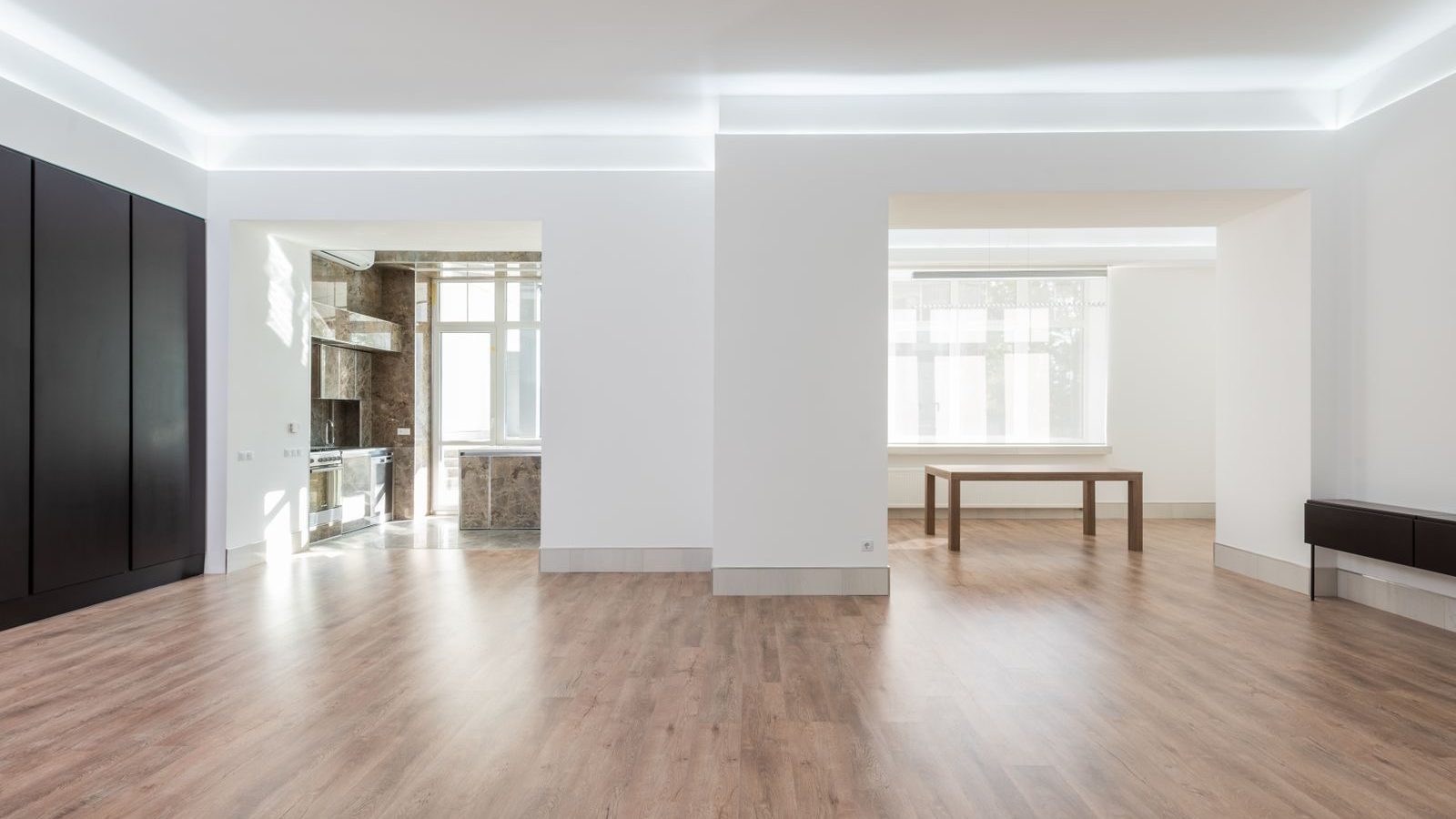
The trend of recent seasons is a wide board of 200–240 mm laid plank-style. A large format calms the pattern: fewer joints, the texture reads as a whole. A narrow board with a deep bevel, on the contrary, is gradually going out — it breaks up the space and is harder to clean, because dust collects in the grooves.
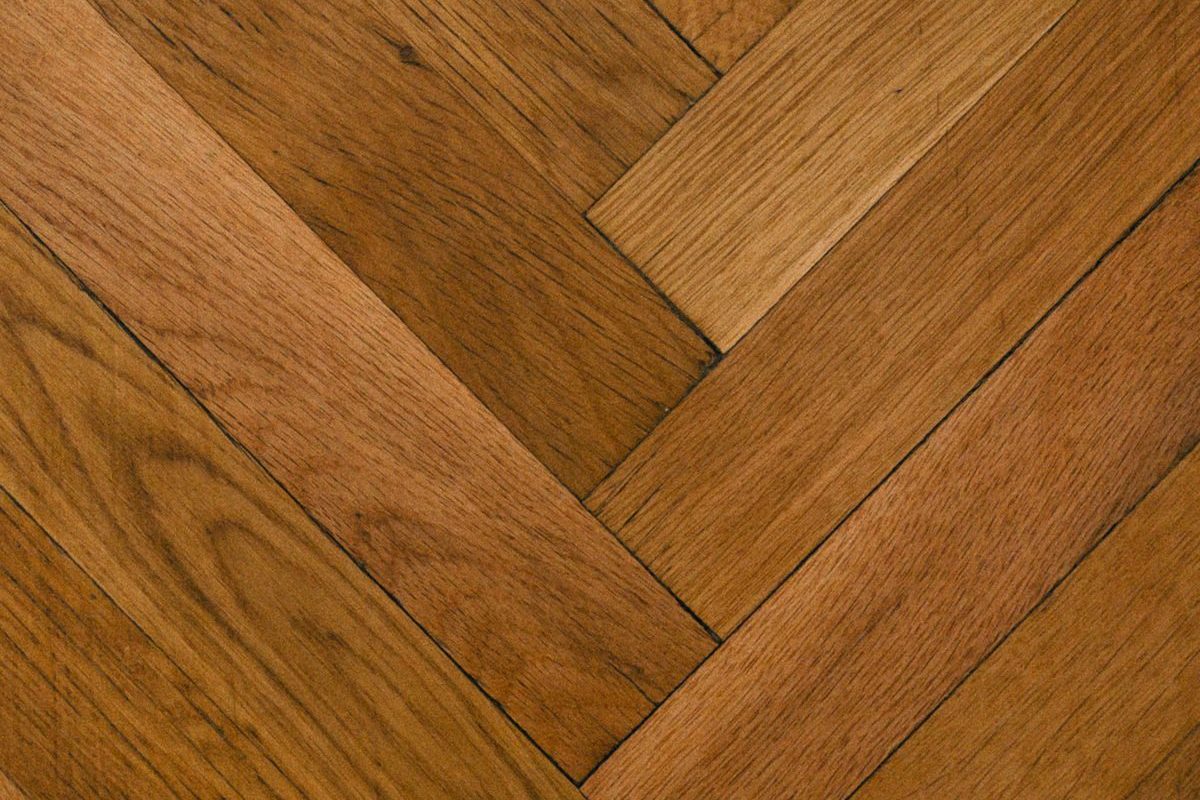
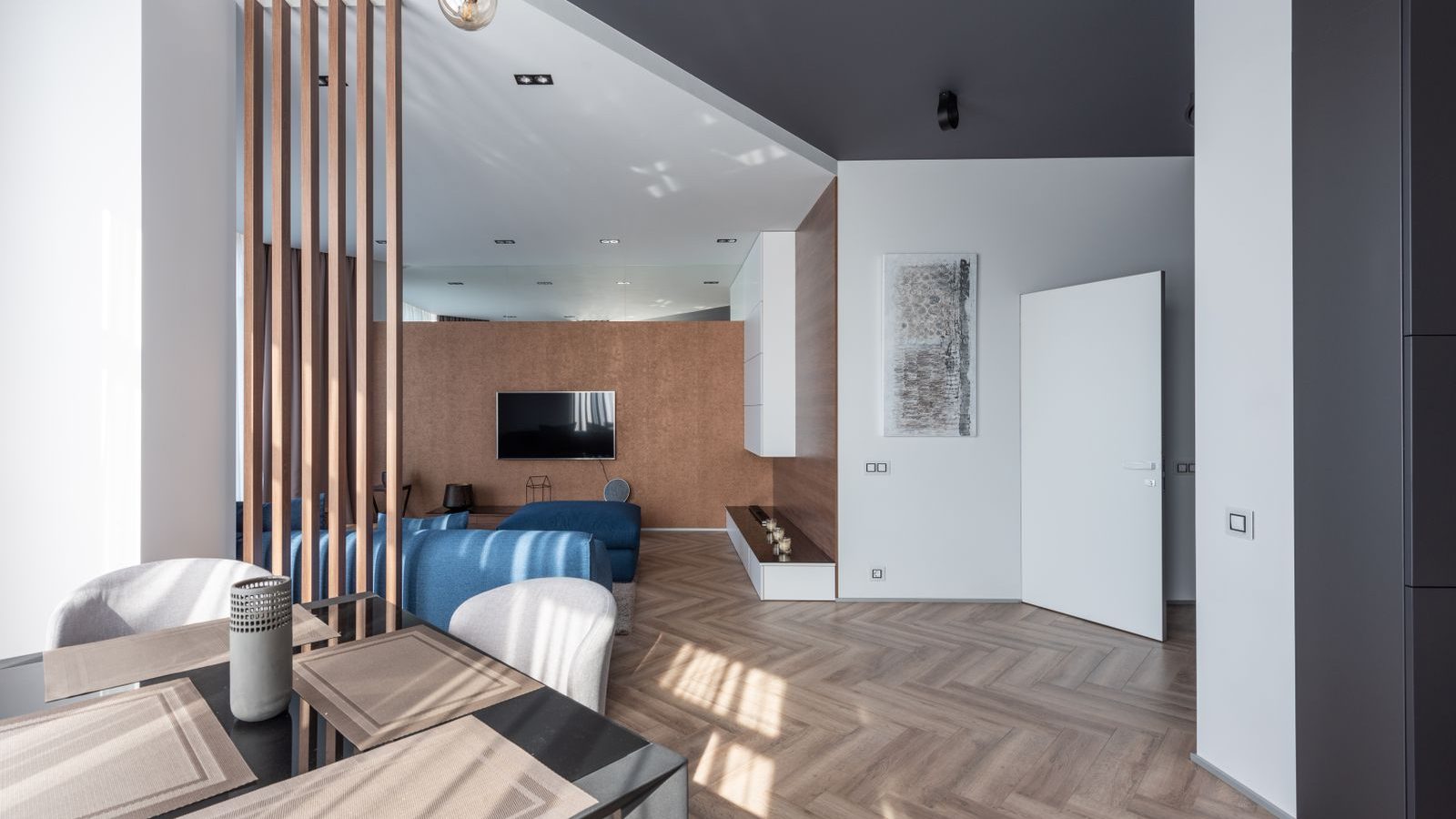
Herringbone is the most recognisable pattern in wood flooring and the most demanding to lay
Brushing and texture
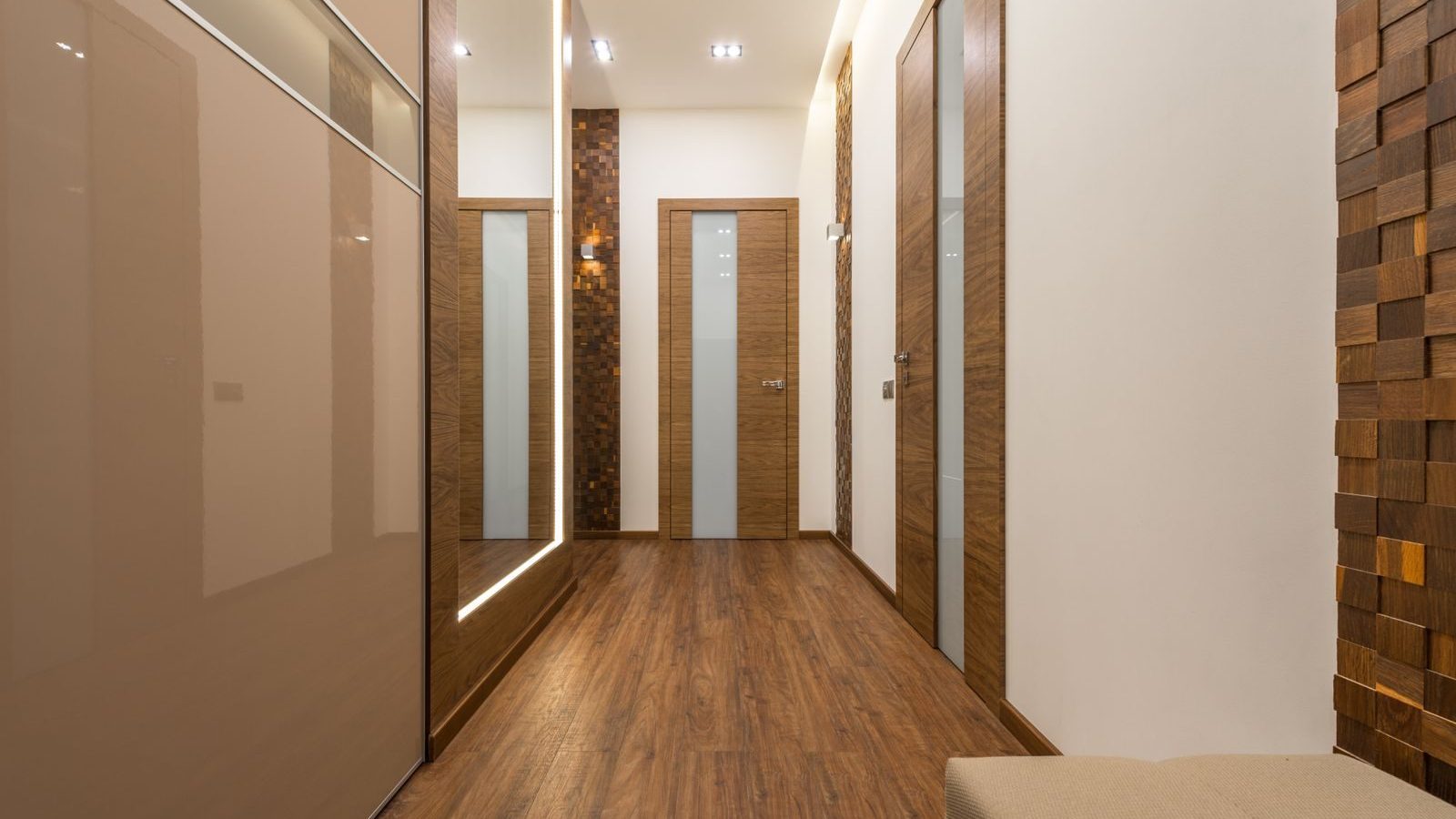
Brushing means removing the soft fibres so the relief comes through. In 2026 the value is in gentle brushing that emphasises the structure of oak, not in a rough «aged» treatment. Paired with a matt finish it gives that hand-made effect: the light scatters, the texture shows, there is no shine.
Oil or lacquer
Lacquer forms a film on the surface: it stands up better to everyday wear, but when damaged the whole board or the whole room has to be redone. Oil soaks into the timber: the floor looks more natural and, more importantly, is repaired locally. The damaged spot is sanded with fine paper (180–240 grit), dusted off, given a thin coat of oil and left to dry for 12–24 hours. The price for that is refreshing it every year or two.
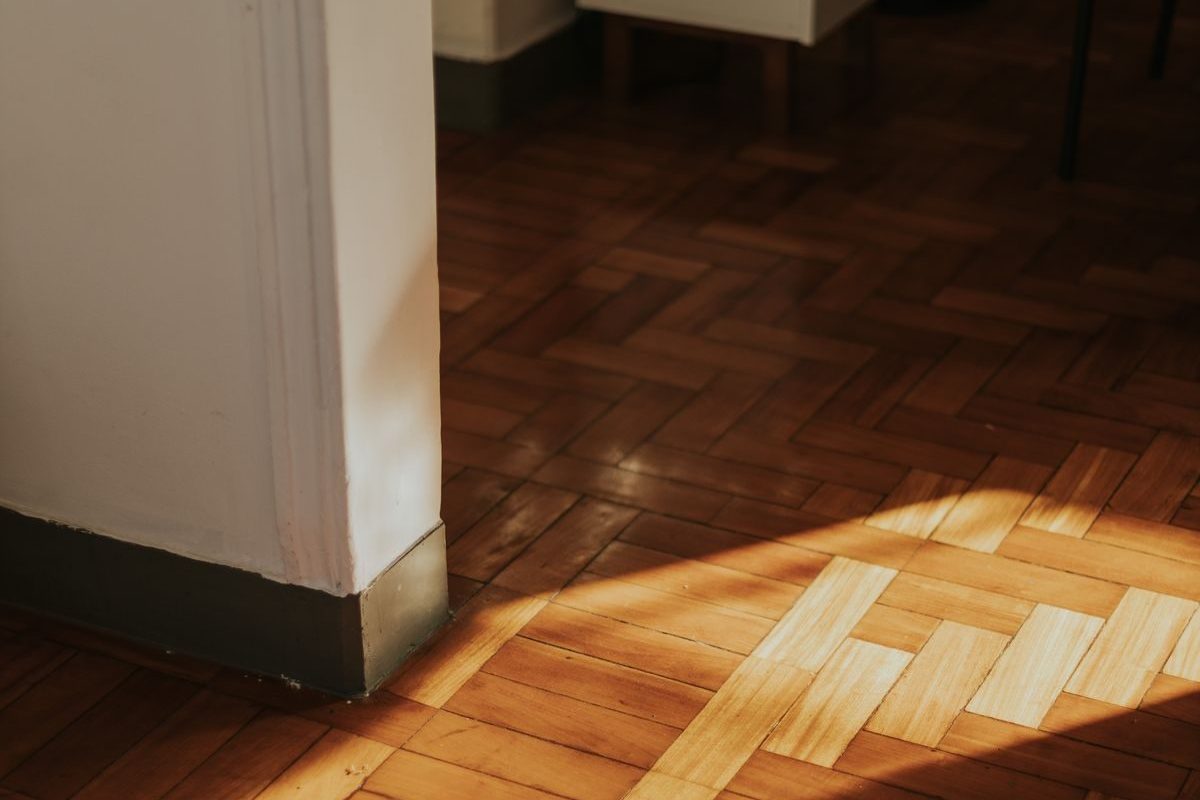
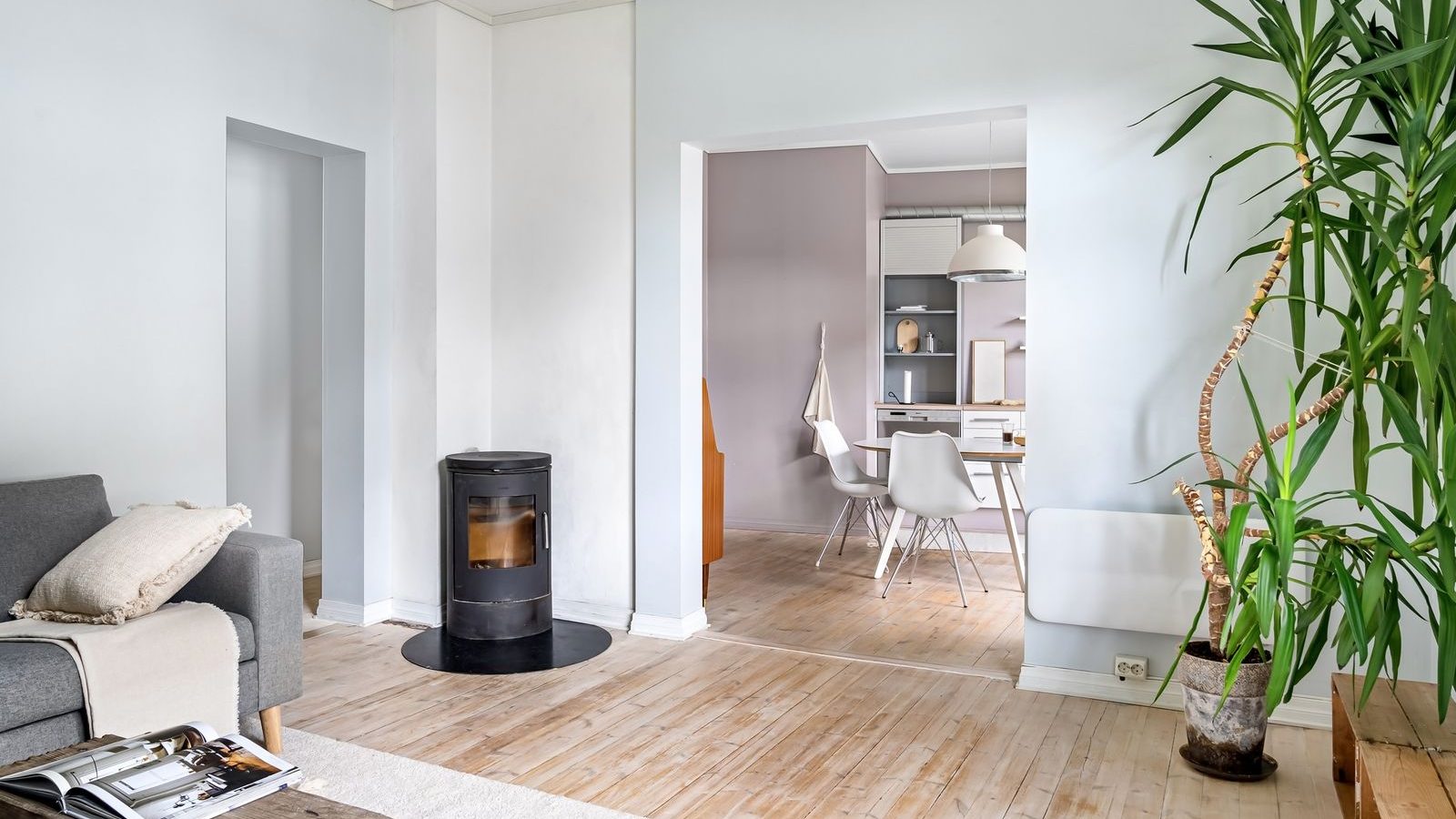
Direct sunlight changes the shade of the timber over time — that is normal
Humidity is the main enemy
Wood is comfortable at a relative humidity of roughly 40–60%. During the heating season the air indoors is dry and the board shrinks, so gaps appear. A humidifier solves the problem completely and costs less than relaying the floor. Engineered wood works with underfloor heating, but only if the manufacturer explicitly allows it and the surface temperature stays within their limits.
Care without fanaticism
A vacuum cleaner and a well-wrung cloth are enough. There should be no standing water on the floor and no abrasive products. Stick felt pads under furniture legs and put a mat at the entrance: 90% of scratches are carried in on the soles of shoes. Choose the product to match the finish — oil and lacquer need different ones.
The engineered wood collections are gathered in the catalogue, and the separate Coswick line is on its brand page. It is better to look at the board in daylight: the shade of oak changes a lot with the lighting — come to a showroom.