
Laminate is still the most popular floor for an apartment: it costs less than parquet, goes down in a day and forgives small irregularities in the subfloor. And precisely because the choice is so wide, it is easy to get it wrong — two boards that look identical can differ two or three times in service life. Here are the five parameters worth looking at first, and only then the colour.
1. Wear class
The 31, 32, 33 and 34 markings describe the load a floor will take without losing its looks. Class 32 is enough for a bedroom or living room, take 33 for the kitchen, hallway and children's room, and 34 makes sense in an office, a showroom or the hallway of a large family. One detail rarely mentioned in the shop: the class is assigned by the weakest property. If a board rates 34 for abrasion but only 32 for moisture, the pack will say 32.
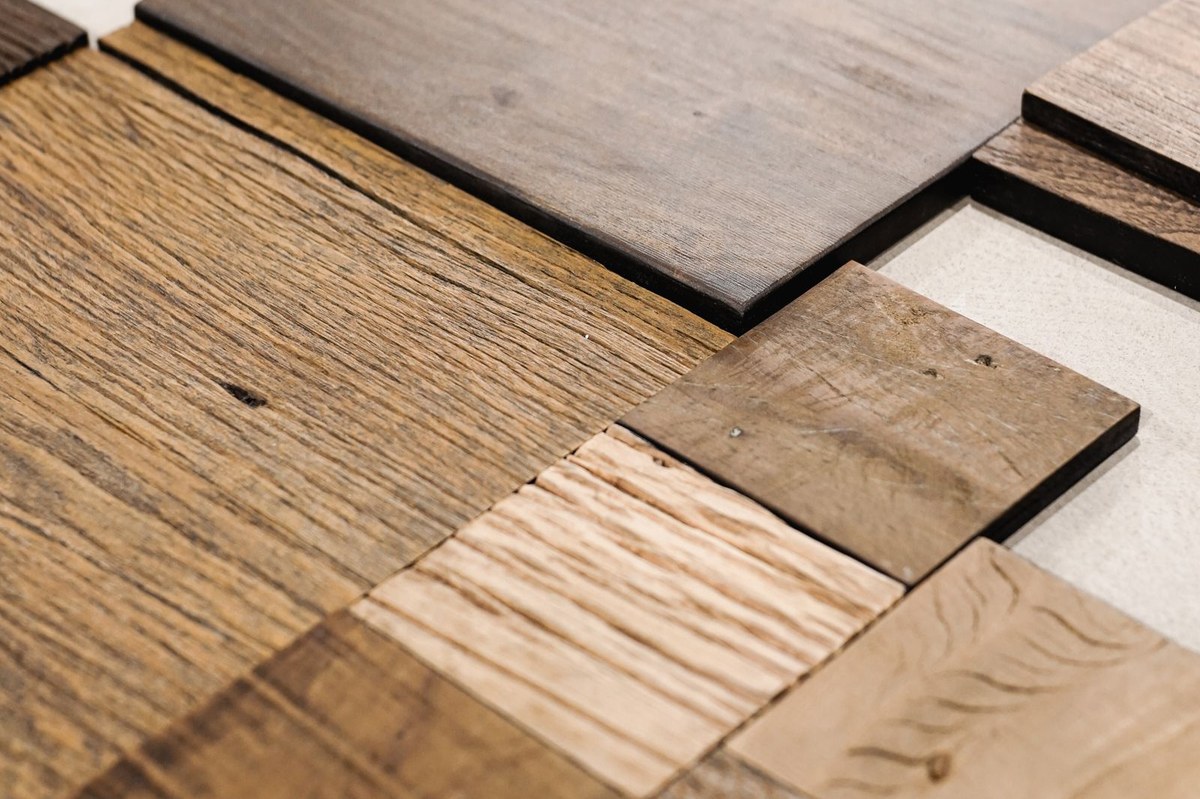
Samples are easier to compare in person: the shade differs between a photo and the showroom
2. Board thickness
The working range is 8 to 12 mm. The thicker the board, the quieter the step, the stronger the lock and the more calmly the floor handles small differences in the subfloor. 8 mm is a sensible minimum for a bedroom; 10–12 mm behaves noticeably better in busy rooms and under furniture on castors.
3. Locking system
Almost all modern laminate is click-locked, without glue. The difference is in the geometry: some systems snap together by angling the board, others by tapping down vertically, which is handier along a wall and in tight spots. A good lock assembles by hand and leaves no step at the joint: what usually ruins the look of a floor is joints drifting apart over time, not abrasion.
4. Moisture resistance
Ordinary laminate is not afraid of damp mopping but of water left standing in a joint. For the kitchen, hallway and bathroom look for a board with declared moisture or water resistance — every factory names it differently (Aqua, Hydro, water resistant) — and treated locks. If the floor gets flooded regularly, it is more honest to look at rigid vinyl straight away.
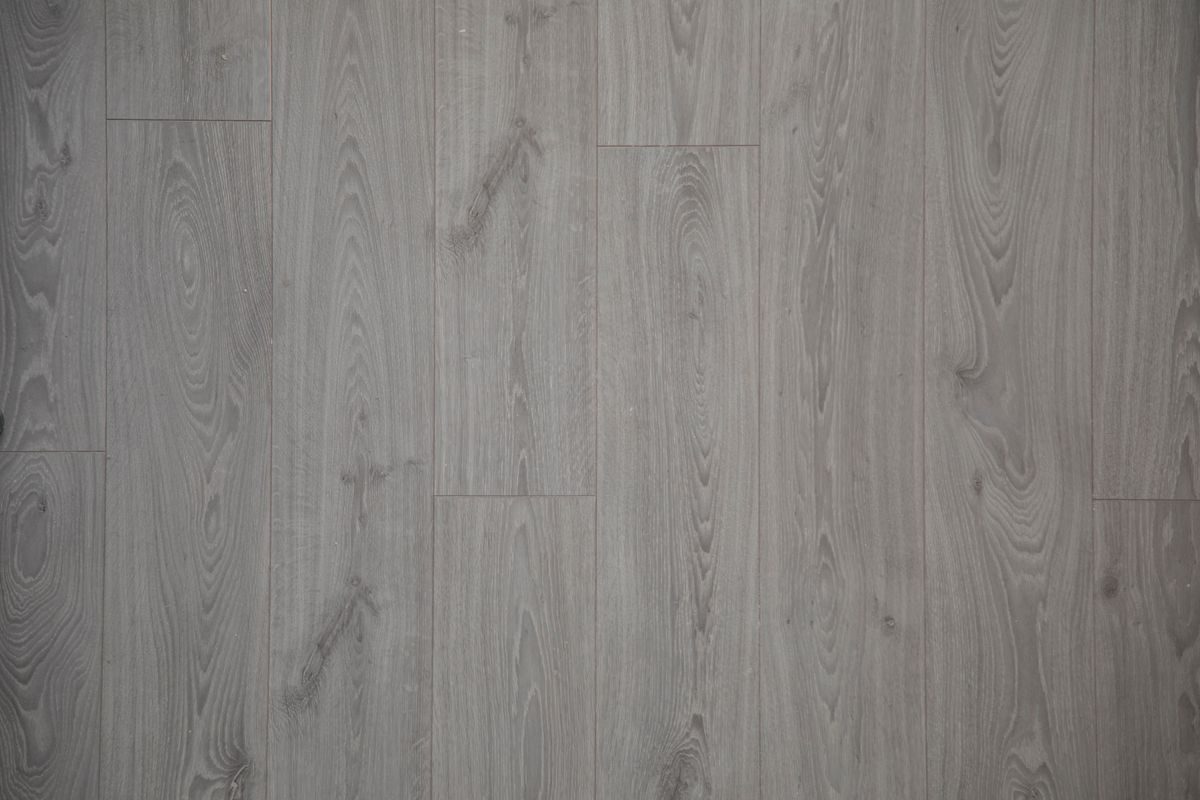
A matt surface with registered embossing separates an expensive decor from a cheap one
5. Texture and bevel
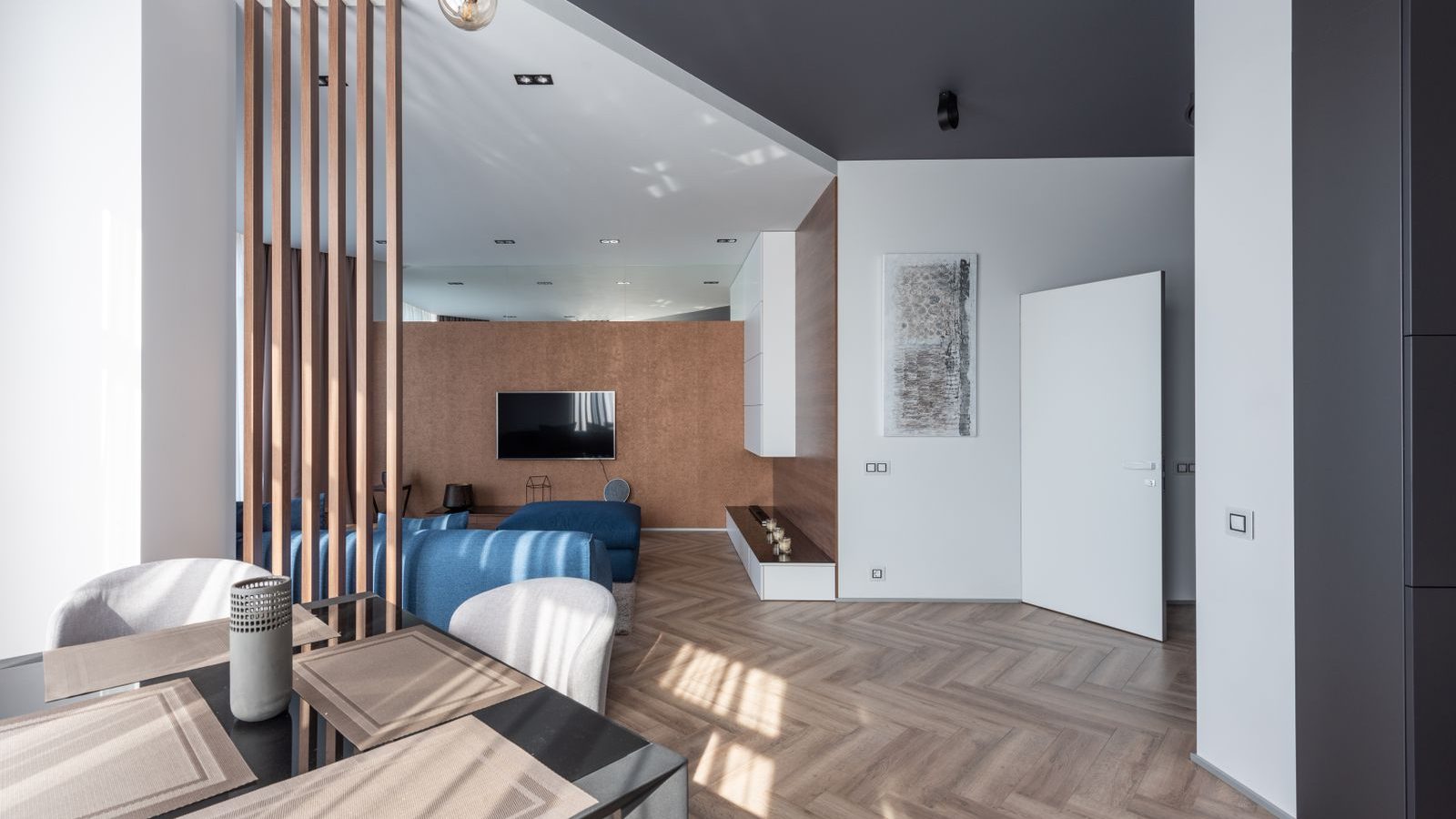
In 2026 the fashion is for matt surfaces with embossing that follows the grain (registered embossing): such a floor looks like wood and barely reflects light. A bevel emphasises the individual board, but a deep bevel on a narrow board makes cleaning harder — dust collects in the grooves. The sensible compromise is a wide board with a micro-bevel.
How much to buy, and what else you need
Work out the area and add a margin: about 5% for straight installation along the wall and 10–15% for a diagonal or herringbone layout. You will also need underlay, skirting and thresholds where the floor meets other materials. And two installation rules that save your nerves: let the packs acclimatise in the room for a couple of days, and leave an 8–10 mm gap at the walls — laminate needs somewhere to expand.
Choosing is easier with the board in front of you. Browse laminate in the MAFF catalogue, and add underlay and skirting to the same order so you do not wait for a second delivery. If you are torn between two options, come to a showroom: the samples lie on the floor and the difference is obvious in a minute.