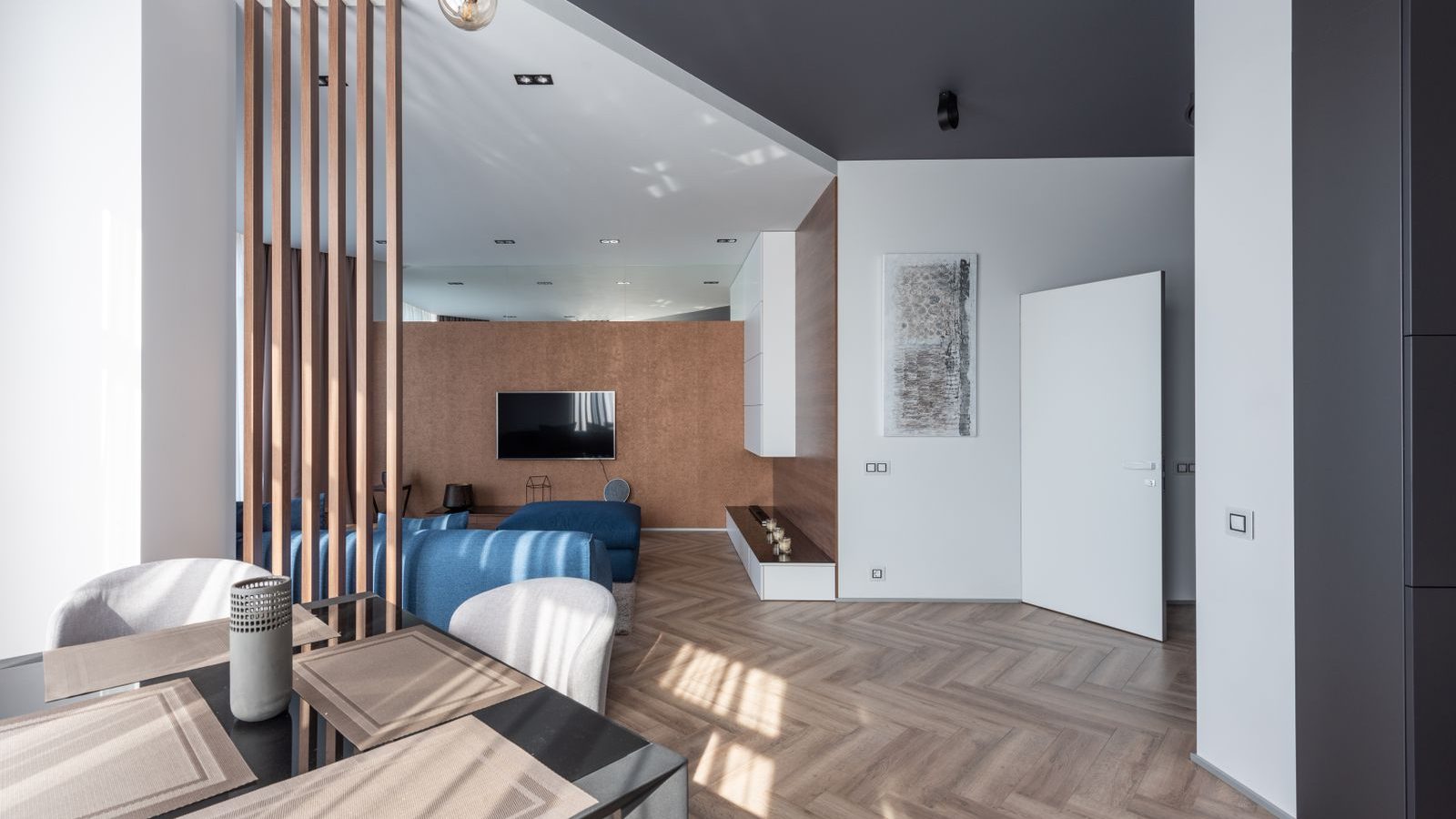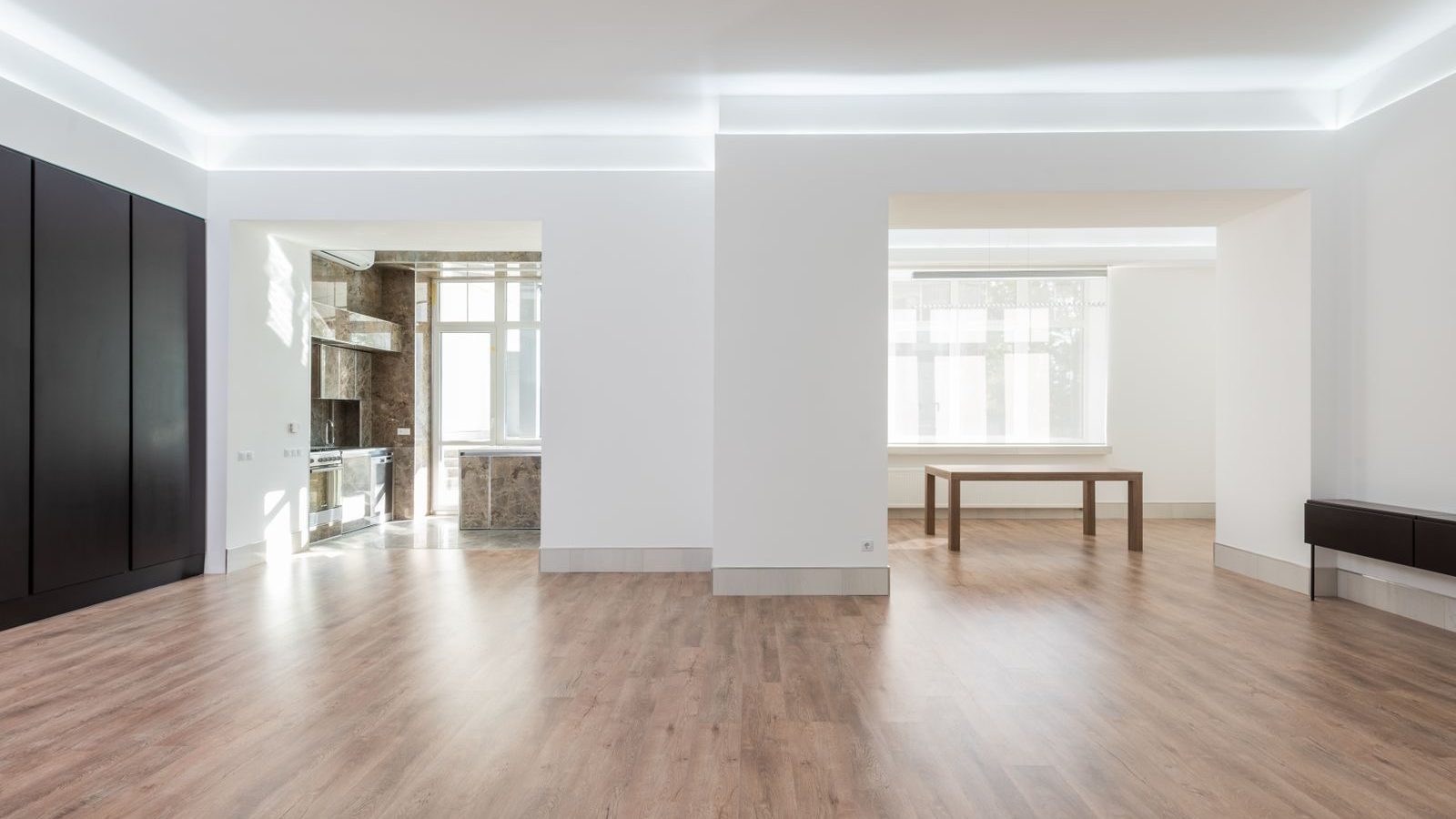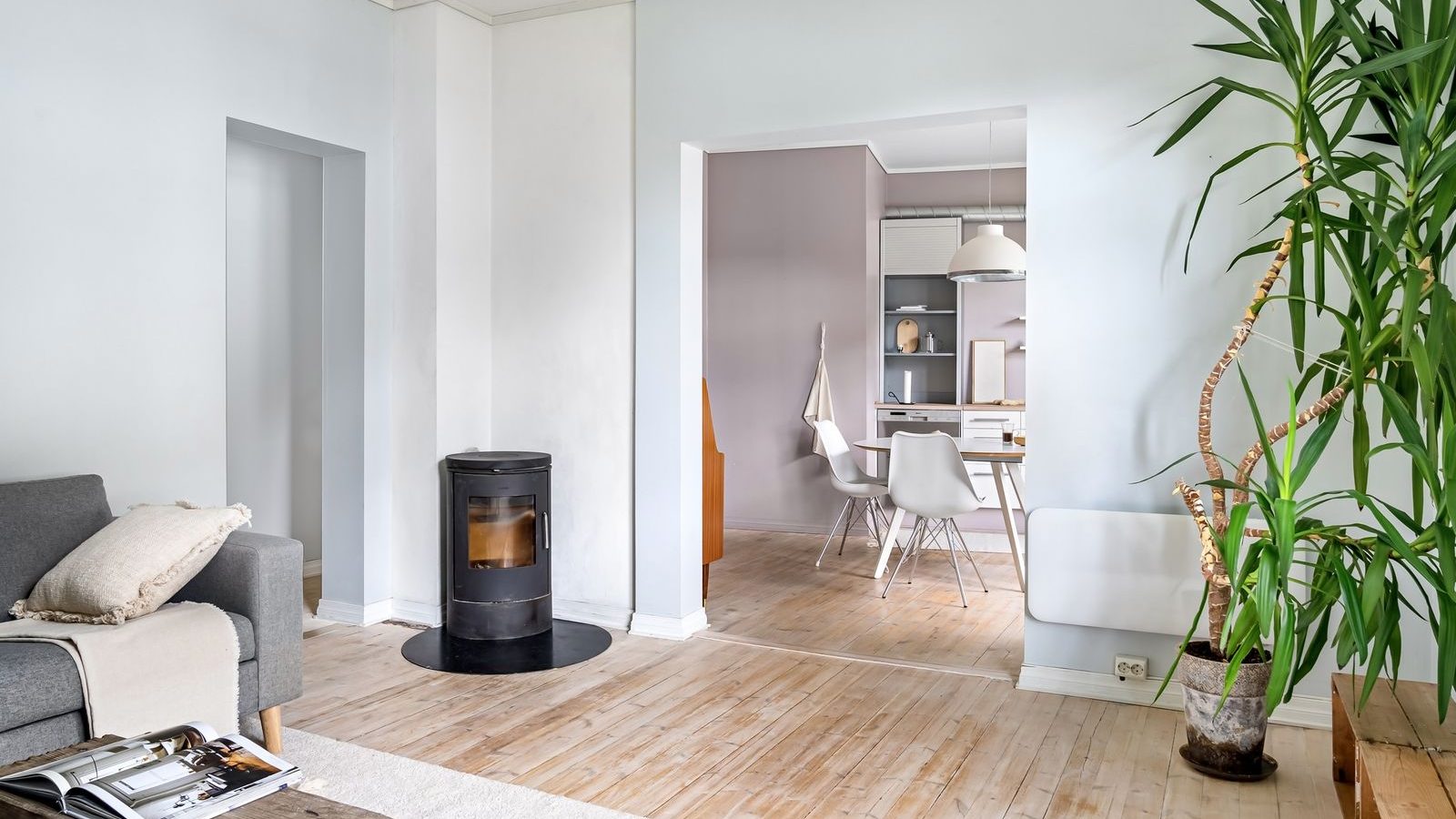

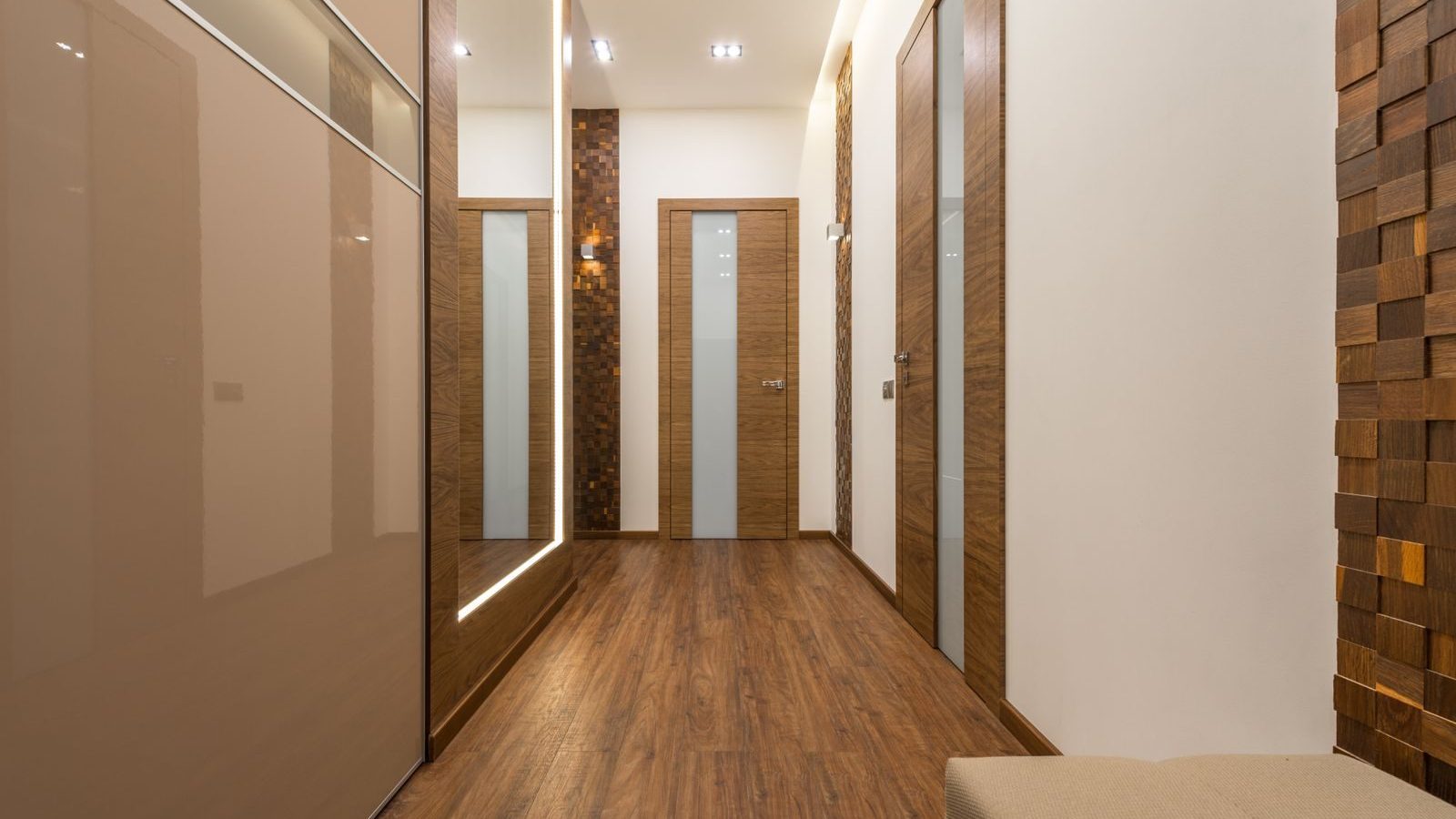
Rigid vinyl tile, or SPC, has gone in a few years from a niche material to the obvious choice for a kitchen and a hallway. Inside is a rigid slab of quartz sand and PVC, on top a decorative layer with the pattern and a transparent wear layer. Hence its character: dense, stable, indifferent to water.
Water
The key difference from laminate: SPC has no pressed wood core to swell. Spilled water does not make the joint bulge, so rigid vinyl is laid without worry in the kitchen, the hallway and the bathroom. The same makes it a logical choice for a ground floor and for homes where floors are washed often.
Underfloor heating
A thin 4–6 mm slab conducts heat better than laminate or engineered wood and does not warp when heated. There is one limit, but a strict one: the surface temperature is kept within the range stated by the manufacturer — usually +28…+40 °C. Heating above the rated figure is the most common cause of trouble, not underfloor heating itself.
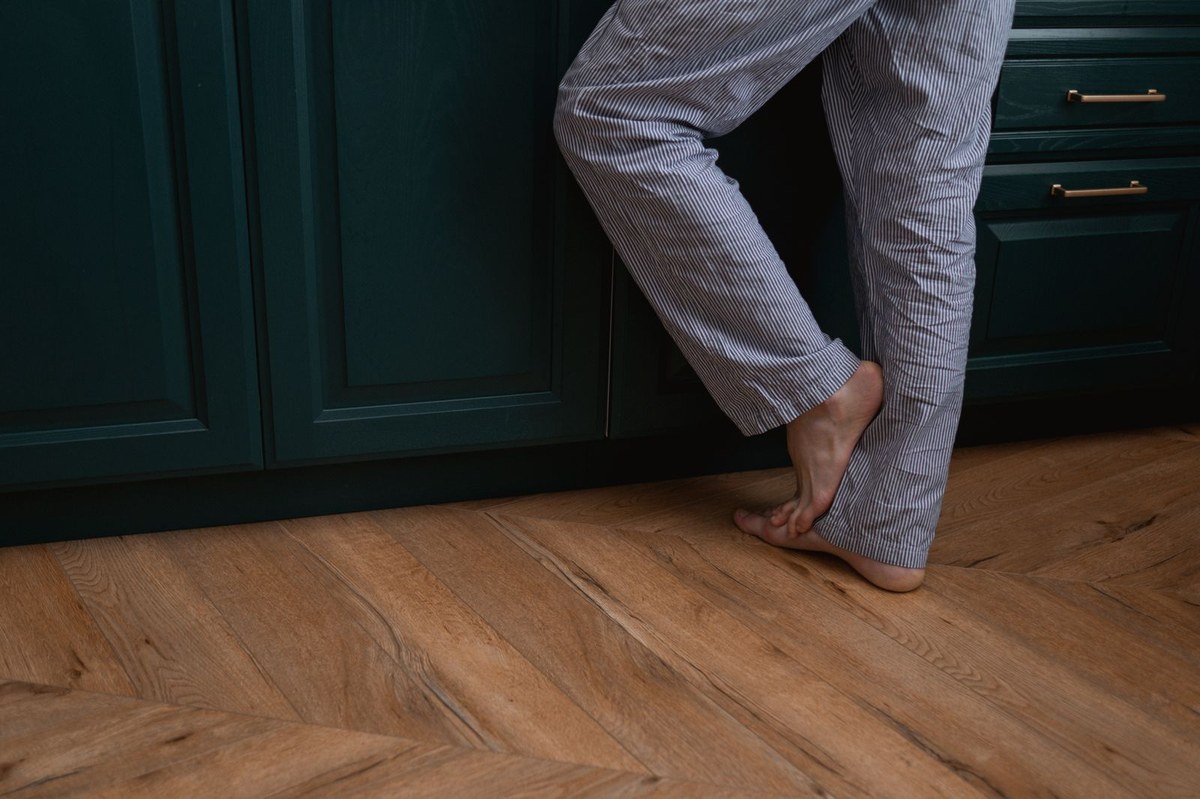
A thin slab gives up heat quickly: people walk barefoot on heated rigid vinyl
Noise
Rigid vinyl dampens impact noise from walking: with integrated underlay manufacturers claim around 19–22 dB. The difference from laminate without underlay is audible straight away — the step sounds duller, with none of that drum-like echo.
Which numbers to look at
With rigid vinyl the familiar «class» matters less than the thickness of the wear layer: 0.3 mm is enough for a bedroom, 0.4–0.55 mm is taken for kitchens, hallways and commercial spaces. The second parameter is the total thickness of the slab: it determines the rigidity of the lock and how forgiving the floor is of an uneven subfloor. The third is the emission class: a quality material is E0–E1.
Where laminate still wins
Honestly, SPC is not needed everywhere. In a bedroom or living room without underfloor heating laminate remains better value, and many people simply prefer the warm wood texture. Rigid vinyl is taken where water, quiet and stability matter: kitchen, hallway, bathroom, children's room, underfloor heating.
A word about installation
SPC is more rigid than laminate, but it does not replace a screed: the subfloor still has to be level, within a couple of millimetres over two metres. Click-lock rigid vinyl is laid floating with a gap at the walls, and the slabs are left to acclimatise in the room for a day or two before installation.
You can see the collections in the rigid vinyl SPC section. If you are comparing it with laminate — it is right there in the catalogue, and in the MAFF showrooms both materials lie on the floor, so the difference in sound and feel takes a minute to judge.